Tāne’s Tree Trust Documents

  • About
  • TTT home

Establishing Native Forests

Download PDF
Tāne’s Tree Trust
Establishing Native Forests

Establishing Native Forests

Tāne’s Tree Trust Factsheet Series

Establishing a woodlot of native trees

Factsheet 9

Refer to the other factsheets in this series for more about successfully establishing native forests.

Introduction

Many native tree species have excellent potential for plantation management to produce timber. Woodlots of key native timber trees will give optimum growth in single or mixed-species plantations if they are established on sites that suit their ecological characteristics and are managed appropriately.

Sustainable harvesting plans can be designed to ensure that the non-timber values of planted native forest will be preserved using continuous cover forestry principles. This involves harvesting only a small proportion of the stand at a time, leaving the high forest structure and associated environmental values intact.

Native trees in our productive landscapes

There are many ways in which native forest plantings can be managed as a future timber resource. There is excellent scope for planting and managing native forest for multiple purposes, including opportunities for increasing the indigenous biodiversity as well as productivity of the primary sector across our rural and urban landscapes.
Greater numbers of native timber trees could be planted where there is the option of utilising them as sustainable timber resources, while simultaneously realising other multiple objectives:

  • Planting urban green spaces: There is potential for utilising timber from native trees that have been planted in urban areas along streets and on large properties. Many are removed as they become too large and unsafe, block views, or their roots damage buildings, roads, footpaths, and drains.
  • Replacing exotic forest with native forest: Long-term timber production could be factored into plans for reversion of exotic forest to native forest. While more research is required to determine how to do this effectively and economically, options include felling and extraction of the exotic trees, or poisoning to waste, and establishing native forest either through managed natural regeneration or planting, with subsequent management for sustainable timber production using continuous cover forestry principles.
  • Providing screens and buffers: Establishment of screens and natural shade within industrial sites could include a mix of native trees which would eventually provide a resource of native timber.
  • Planting corridors along highways: Stretches of the nation’s highways are being planted in natives - including timber tree species in some instances- to provide attractive vistas for motorists and screens for adjacent housing. They are another developing resource of native timber.
  • Developing a network of farm shelterbelts: Some timber-producing native trees can be used to form single or multi-row shelterbelts, along with inter-planted shrub hardwoods, ti kouka and harakeke to provide shelter and shade.
  • Enriching scrubland: Enrichment planting in lines or gaps in native or exotic shrubland is an option for re-introducing key timber species. Planting scattered groups will provide a seed source to enhance natural regeneration of forest trees (refer to Factsheet 5).
  • Reducing sediment loss on erosion-prone hill country: Re-afforestation of previously forested steep slopes may be the only practical option to reduce soil erosion. Sustainable selective logging of timber, using continuous cover forestry methods, could potentially be undertaken without compromising slope stability.
  • Establishing woodlots within retired riparian zones: Riparian zones represent a significant land area for the planting of native trees and shrubs. Timber trees can be planted in groves or small groups along upper banks or on elevated terraces, especially where there are generous setbacks of pasture and exotic production forestry.
  • Establishing dedicated timber woodlots for specialty timber: Many native tree species show excellent potential to grow for timber. Small woodlots established on good sites will give optimum growth. While single-species stands can be planted initially, these do not have to be managed as a monoculture in the long term. Selectively thinning and harvesting individual trees or small groups will provide opportunities for planting or allowing regeneration a wider range of native tree species within gaps.
  • Enhancing and extending forest remnants: Landowners may want to extend existing forest remnants on farmland by fencing off adjacent areas and planting with native trees. These can contribute to corridors of biodiversity as well as the long-term option of sustainably supplying timber via continuous cover forestry.
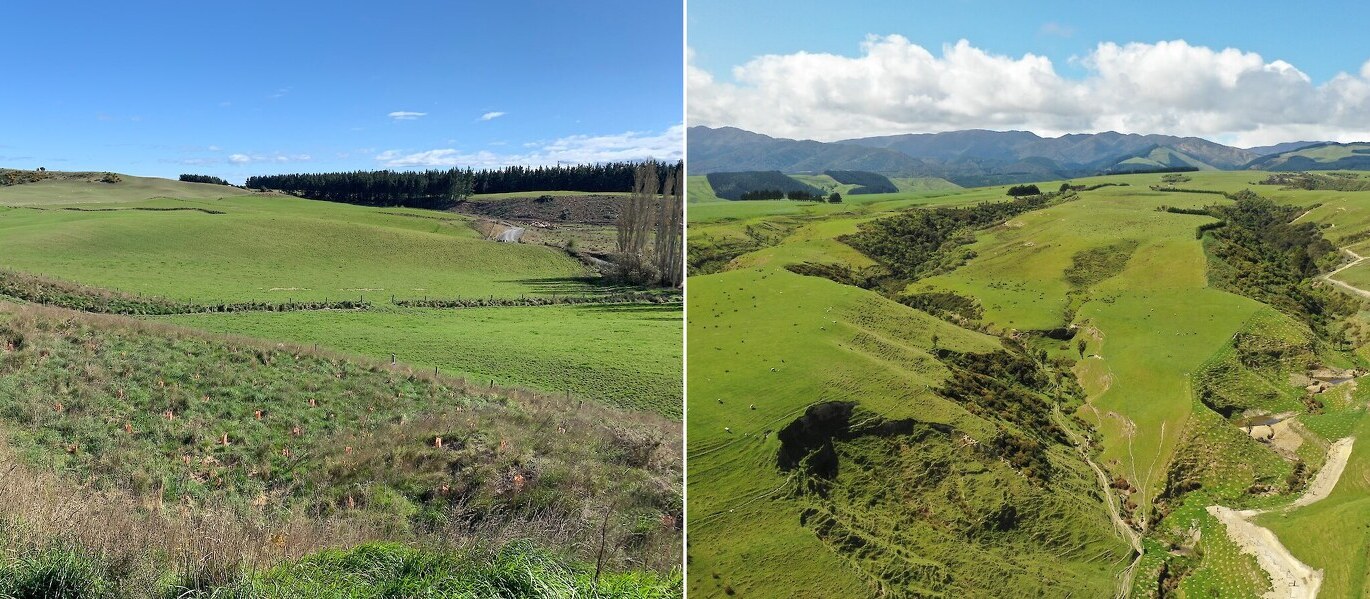
Extending native forest along a riparian zone by planting on a farm in South Wairarapa – fenced and recently planted (left) and an earlier fenced area naturally regenerating in natives (right).

Extending native forest along a riparian zone by planting on a farm in South Wairarapa – fenced and recently planted (left) and an earlier fenced area naturally regenerating in natives (right).

Optimum sites for native tree plantations

  • For native tree species, best plantation growth will occur on sheltered sites where soils are deep and fertile and there is adequate moisture. While this will compete with existing productive land uses, there are many areas within even our most productive lands with the potential to establish small woodlots of native timber trees to complement and enhance other landuses.
  • Each native tree species has its own ecological requirements, so target planting of each species to its preferred site (refer to the Right Species Right Place factsheet No. 4 LINK). For instance, totara and black beech tolerate drier sites, kahikatea likes moister sites, and rimu requires high-rainfall sites and planting later within a developing nurse crop.
  • Rather than a rigid or totally random planting pattern, flexibility that allows matching species to preferred sites will ensure greater success of planting programmes along with good site management and silviculture practices (refer to Factsheet 3). This could see groves of kahikatea on low lying flats, totara on drier upper hill slopes, and kauri or puriri on more sheltered mid-slopes.

Commonly planted native tree species

Rewarewa
Rewarewa
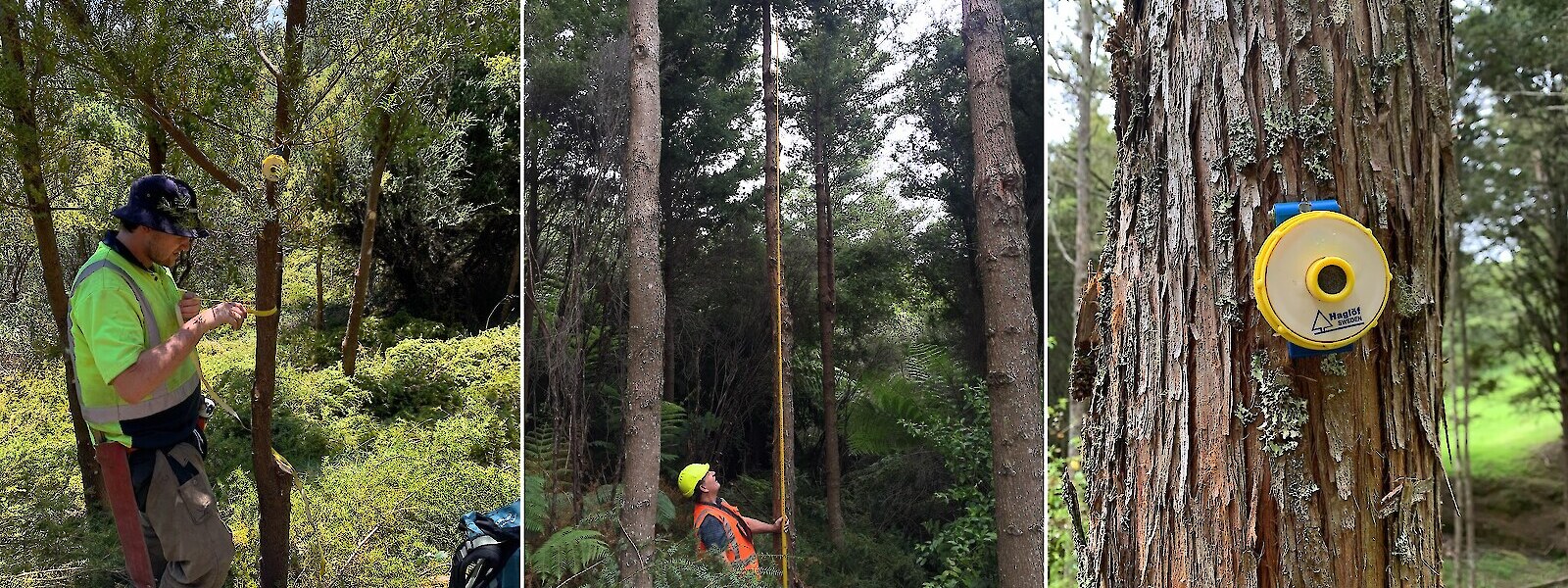
  • Over 120 planted stands of native trees and shrubs ranging in age from 3 to 110 years old were surveyed nationwide and their growth assessed by Tane’s Tree Trust. The data provide valuable insights into establishing and managing native trees to meet multiple objectives, including as a timber resource.
  • Over 60 native tree and shrub species were recorded during the survey.
  • Some tree-only plantations were planted on sheltered sites while other plantations comprised inter-planted trees with a nurse of shrub species to provide shelter.
  • Generally, on good sites with good management, most of the conifers will require a minimum of 80 years to provide a 50 cm diameter sawlog. Although most of the timber will be sapwood, it still has uses. The beeches and some of the other tree hardwoods such as puriri will grow faster, achieving a diameter of 50 cm in 40-60 years.Profiles for most species, including major uses for timber (and other products) with an indication of growth rates and timeframes for producing a sawlog, are on the Tāne’s Tree Trust website.
  • Best practice will improve success. This includes factoring in the natural distribution of each tree species and its ecological characteristics, using ecosourced stock and matching species to appropriate sites.
  • Options for planting either single or multi-species plantations can be guided by the composition of nearby forest remnants or by records of local forest types.
  • The most commonly planted native tree species in the Tāne’s Tree Trust Indigenous Plantation Database are shown in the table below, most of them well-known timber species.
Species groupCommon or Māori nameBotanical name
ConifersKauriAgathis australis
RimuDacrydium cupressinum
KahikateaDacrycarpus dacrydioides
KawakaLibocedrus plumosa
TanekahaPhyllocladus trichomanoides
TotaraPodocarpus totara
MiroPrumnopitys ferruginea
MataiPrumnopitys taxifolia
BeechesRed beechFuscospora fusca
Silver beechLophozonia menziesii
Black beechFuscospora solandri
Other tree hardwoodsTaraireBeilschmiedia tarairi
KarakaCorynocarpus laevigatus
KohekoheDysoxylum spectabile
RewarewaKnightia excelsa
PuririVitex lucens

Establishment options

Puriri
Puriri

Landowners have the option of planting a diverse range of native shrub and tree species where a small proportion can be native timber trees, or planting only trees of the desired timber species. These options will be influenced by the location, climatic and soil conditions of the planting site, the resources available for planting and management, and objectives of planters.

Planting with a nurse crop

  • Most native tree species benefit from being inter-planted with a nurse cover to provide side shelter (but with overhead light) as protection from extremes of climate and help ameliorate the planting site.
  • Pioneer nurse species act as a low-cost filler between interplanted trees that will help provide quick canopy cover to suppress weed growth.
  • Care is required to make sure nurse species do not overtop interplanted native trees during the establishment phase.
  • From about 20 years after planting, interplanted native trees will start to dominate the stand as growth of many of the short-lived or short-statured nurse species begins to slow.
  • The side shade provided by a nurse cover such as manuka or kanuka during the two or more decades of early establishment will also encourage tree species to grow straight, resulting in a higher proportion of trees with single leaders and smaller lower branching, thus reducing the cost and time involved in pruning.
  • Refer to Factsheet 8 for more information on use of nurse crops including species selection.

Planting trees only

  • There are pros and cons of planting tree-only stands that can be influenced by species selected, planting density, commitment and resources available for management and longer-term objectives.
  • A major consideration is planting density.:
    • High-density planting of trees such as at 1.5 m spacing (equivalent to 4444 stems per ha) is expensive; if there is high survival and good early growth, many trees will need to be thinned within a decade of planting to maintain growth of residual trees.
    • Lower-density planting such as 2 or 3 m spacing (equivalent to 2500 and 1100 stems per ha respectively) will not achieve canopy coverage for at least two decades, depending on growth and species planted, leaving sites vulnerable to weed invasion unless there is a prolonged period of maintenance.
  • Some species such as kahikatea, tanekaha and kauri form mostly single straight leaders irrespective of planting conditions, whereas others like totara and many of the tree hardwoods will form rounded multi-stemmed crowns, often with multiple leaders. when planted at wider spacing, requiring intensive silviculture.
  • Depending on the growing conditions and species and particularly planting density, thinning and pruning of final crop trees will likely improve tree form and ultimately wood quality.
  • For example:
    • A totara plantation established at 2m plant spacing (2500 stems pe ha) took a decade before canopy closure and virtually all trees still have poor form with multiple leaders and lower coarse branching 30 years after planting. Other stands planted at higher density (e.g., 1.5m apart, 4000+ stems per ha) have a higher proportion of straight single trunks with small lower branching.
    • In contrast, kauri naturally form single stems and lower branches naturally detach (abscise) with increasing shade under the developing canopy, requiring minimal silviculture.

Planted native forest certificate

The sustainable management provisions of the Forests Act don’t apply to planted native forest. If you’re planting native trees for harvest, or think you might want to harvest them in the future, you should apply to Te Uru Rākau (TUR) for a Planted Indigenous Forest Certificate. This allows landowners to prove that the stand was planted even if it may eventually look like a naturally established forest. This certificate is free and can be used to support a future application to TUR to mill timber from any planted trees. Download the TUR planted forest certificate template here.

Other regulations apply if you’re planning to plant new forest. The Resource Management Act (RMA) 1991 applies if you’re clearing vegetation or cutting down trees to prepare your site, so talk to your local council for information on resource consents for this activity.

Growth rates

  • The perception that natives grow slowly is often based on plantings that have used poor quality stock, have been poorly sited, or where essential after-planting care has not been adequate.
  • Historically, most natives have been planted on land left over after the best land has been converted to pasture or exotic plantation forestry.
  • From the plantation surveys nationwide, the native conifers showing the most rapid height growth were kauri and kahikatea which averaged over 23 m 80 years after planting while totara averaged 19 m. Kauri, kahikatea and totara all showed very similar average DBH growth, averaging over 30 cm at age 60 years with rimu marginally slower averaging 29 cm. Find out more.
  • Some of the beeches are amongst the fastest growing native trees. Preliminary investigations of other native hardwood tree species such as puriri in a limited number of stands also indicate fast growth rates. Find out more.
Diameter/age regression curves for conifers derived from data in the TTT Indigenous Plantation Database.

Tāne’s Tree Trust Indigenous Forestry Plantation Database

Tāne’s Tree Trust (TTT) has developed a nationwide register of plantations of native trees including selected stands of nurse shrub species, both historical and recently established. The TTT Indigenous Forestry Plantation Database provides growth information on native tree and shrub species that have been planted from 5 to over 100 years old and is being used to develop growth and yield models for the major species as well as carbon modelling of planted native forest.

Tane’s Tree Trust is regularly adding new measurements to this database to improve estimates of growth rates as many earlier established plantations were often poorly sited and maintained. Further development of this database is planned to include an interactive web-based system to allow landowners to access this information at both a regional and nationwide level to help user decisions on selection of species, matching these to appropriate sites, management requirements and expected growth rates.

Carbon and planted native forestry – the figures in a nutshell

  • While most of the focus for carbon sequestration is on establishing fast-growing exotics such as pines and eucalypts, there is also increasing interest in planting native species, which provide many benefits in addition to storing carbon.
  • The average carbon stock and carbon mean annual increment for selected native species and ages of stands is shown in the table below and compared with natural native forest, regenerating shrubland and planted radiata pine.
  • Growth rates of the planted natives are from the Tane’s Tree Trust Indigenous Plantation Database, the natural native forest from the New Zealand Forest Industry, and the regenerating forest from the inventory of post-1989 regenerating stands.
Forest typeAge (years)Carbon stock (tCO2eq/ha)Carbon sequestration MAI (tCO2eq/ha/year)
Natural native forest926
Regenerating native shrubland604808
Planted kauri6090015
Planted totara6075012.5
Planted rimu605759.6
Planted puriri6060010
Planted beech4060015
Planted shrubs2020010
Radiata pine2776628.4

Native trees

  • Carbon sequestration rates of planted New Zealand native tree species are slower than those of fast-growing exotic species at young ages. Beyond about age 20 years, the current annual increment of carbon sequestration can approach that of exotic species.
  • Growth rates can vary considerably and to achieve good levels of carbon sequestration, native plantations should be established on suitable sites and be carefully managed.
  • The native tree species with fastest sequestration rate on suitable sites are red and black beech. Kauri is the fastest sequestering conifer.
  • In a national carbon inventory of New Zealand’s natural forest, carbon stocks in most plots ranged from 400 to 1200 t/ha CO2 equivalents. Plantation models indicate that these levels of carbon sequestration can be achieved within 40 to 80 years. This indicates that a relatively rapid sequestration rate is possible for native tree plantations compared to old-growth natural forests.

Native shrubs

  • Because shrubs are often established at higher stockings, plantings of native shrub hardwood and small tree species - commonly used in revegetation programmes on open sites - can provide faster sequestration rates than native tree species over the first two decades after planting.
  • While they provide little additional sequestration beyond age 20-30 years, this coincides with the period when native tree species accelerate in growth rate.
  • Establishing initially faster growing shrub species therefore has the advantage of not only providing native tree species planted on open sites with essential shelter in early years but also a substantial boost in carbon sequestration over the first two decades of planting. However, native tree growth rates can be slower under shelter than when established in pure stands because shelter competes with tree species. Therefore, mixed shrub and tree plantings need to be carefully managed.

TTT Carbon Calculator

  • Landowners and those wishing to offset their carbon emissions can use the Tane’s Tree Trust Carbon Calculator for Planted Native Forest to determine carbon sequestration from their planted forest.
  • This tool allows users to work out how much carbon their planted native forest is storing over a defined period of time. It also allows users to determine how many native shrubs and trees they will need to plant to off-et their carbon footprint.
  • The TTT Carbon Calculator for Planted Native Forests is available on the TTT website.

Native forest factsheets series

These factsheets on establishing native forest have been compiled by Tāne’s Tree Trust with funding from Te Uru Rākau’s One Billion Tree Partnership Fund with support from The Tindall Foundation and Trees That Count. Others providing information and undertaking peer review include Scion, Auckland University of Technology, Northland Totara Working Group, iwi, landowners and selected local authorities and government departments.

Information and recommendations are provided by Tāne’s Tree Trust in good faith based on interpretation of information collated and reviewed which must be assessed by users on a case-by-case basis and/or specific technical advice for their sites. Accordingly, Tāne’s Tree Trust is not liable on any ground for any loss, claim, liability or expense arising from or due to any errors, omissions or advice provided within these factsheets.

Tāne’s Tree Trust

© 2026 Tāne’s Tree Trust • Website by RS

  • Home
  • Ecosourcing of native species for planting
  • The basics of planting natives
  • TTT home
  • Natural regeneration of native forests
  • How to establish "seed islands" of natives
  • Site preparation for planting natives
  • Getting ready for planting
  • How to plant native seedlings
  • Planting nurse species – the concept of succession
  • Establishing a woodlot of native trees
  • Environmental values of native forests
  • Cultural and social benefits of native forests
  • Economic potential of native forests
  • Planting native forest – selecting the right species for the right site
  • Monitoring success of planted natives
  • Collecting and handling seed of native trees and shrubs
  • Resilient native forest in an era of climate change
  • Converting clear-felled exotic plantation forest to native
  • Selecting the right nursery-raised native seedlings for planting
  • About