Tāne’s Tree Trust Documents

  • About
  • TTT home

Establishing Native Forests

Download PDF
Tāne’s Tree Trust
Establishing Native Forests

Establishing Native Forests

Tāne’s Tree Trust Factsheet Series

Converting clear-felled exotic plantation forest to native

Factsheet 17

Refer to the other factsheets in this series for more about successfully establishing native forests.

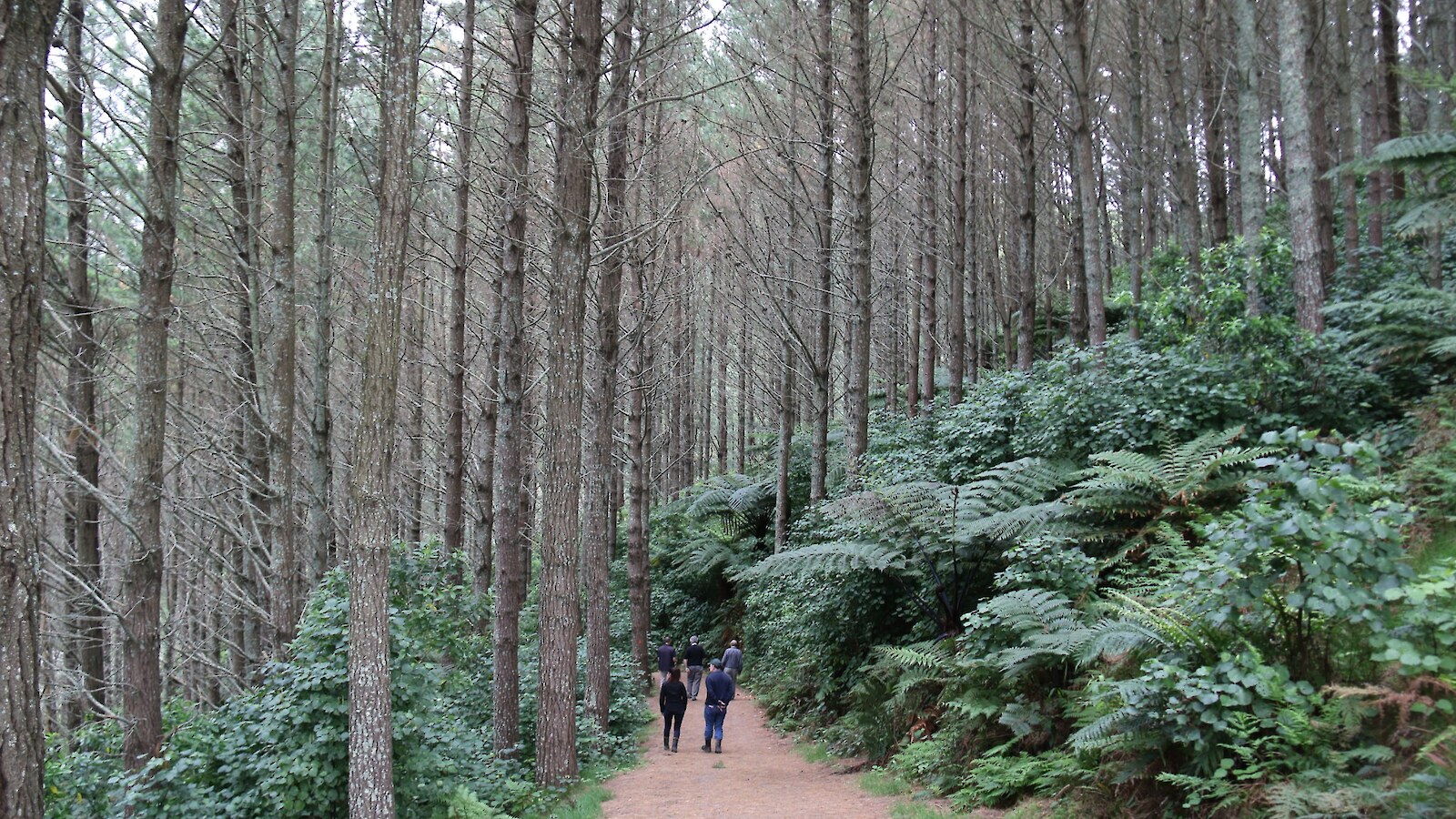
A dense understorey of native species that can occur within a mature productive pine forest can give a false impression that a native forest will automatically replace the pines once they are logged.

A dense understorey of native species that can occur within a mature productive pine forest can give a false impression that a native forest will automatically replace the pines once they are logged.

Introduction

There is increasing interest by landholders who have recently clear-felled or are about to clear-fell their stands of radiata pine, and want to replace them with a permanent cover of native forest. This includes small 1-2 ha blocks to substantial areas owned by iwi, some well over 1000 ha. Most stands are radiata pine and other exotic conifers, but there are also a range of exotic hardwoods such as eucalypts, willows and poplar.

The options to convert clear-felled radiata pine stands or other exotic species needs to be assessed on a site-specific basis as climate, landform, site, soils, weed growth including wilding pines, and pest animals are all factors that will influence decisions. A dense understorey of natives may not guarantee that the process of converting a clear-felled production exotic stand to native forest will occur naturally.

This factsheet covers the issues landholders need to consider when contemplating converting an exotic stand that has been managed and clear-felled as a productive timber crop to a permanent cover of native forest. The focus is on clear-felled sites where the merchantable logs have been removed. The option of manipulating a standing semi-mature or mature pine stand by partial felling or other options such as poisoning to slowly open up the canopy to allow native understorey or interplanted natives to take over is not considered here, as there is currently not enough research to inform best management practices.

Reasons for converting to native forest

Clear-felling steep hill country as part of production pine forestry leaves steep slopes susceptible to erosion from severe, high rainfall events after each cycle of harvesting, until canopy closure in the new crop. Highly erodible sites are best kept in a permanent native forest cover but managing conversion will take time.

There are a number of reasons landholders would want to re-establish native forest cover rather than replant a recently logged productive pine forest. These include:

  • Productive pine forestry on their site is economically marginal, or not economical due to steep terrain, remoteness from markets, access difficulties or a small block is not worth planting back into pines.
  • Desire for a diverse permanent native forest that has all the benefits of increased indigenous biodiversity, landscape aesthetics, and other environmental values such as water quality.
  • Reduced erosion, especially for steep hill country where clear-felling of exotics every three decades leaves marginal land susceptible to erosion between rotations.
  • Potential for different income streams including adventure tourism and multi-floral honey production.
  • Recreational activities such as tramping, mountain bike riding, glamping, and hunting and fishing.

The challenges of establishing native forest on cutover pine sites is highly site dependent. Planting at scale is expensive and managing sites to regenerate naturally will require ongoing weed and pest animal control and patience.

Clear-felled pine sites

Mature pines stands can often have a significant understorey of native vegetation but mostly shade-tolerant shrub hardwood species. Surveys of understorey vegetation show that species composition is influenced by the age of the overtopping pine canopy, density of pines and proximity of native seed sources. Despite a healthy well developed native understorey within mature pine forest, the overall biomass and carbon of the understorey is less than 5% of the total forest dominated by pines up to 30 m high. The heavily shaded environment also results in a high proportion of tree and ground ferns, and there is virtually no regeneration of later successional tree species such as the podocarps or tall hardwoods that would form high native forest.

While there can sometimes be an understorey of native species developing under a maturing pine plantation, which could form the basis of a regenerating native forest, clear-felling operations and extraction of pine logs will result in almost all of the understorey crushed or destroyed. In addition, the site will be covered in logging debris (slash) from the logged pines, often mixed with soil churned up by ground-based machinery, which makes access difficult and leaves sites highly vulnerable to invasion of exotic species, including wilding pines.

Left: Many maturing pine stands can have a substantial understorey of natives dominated by shade-tolerant shrub hardwoods and ferns. The proportion of biomass and carbon within the understorey in mature pine forest is very small compared to the biomass and carbon in the dominating pine trees. Right: Standard clear-felling operations to remove the pines for timber will result in almost all understorey vegetation being crushed or destroyed along with a site covered in slash, mainly the logging debris of pines.

Options for converting logged pine to native

Aerial view of a pine cutover soon after logging in a regional park in the Bay of Plenty that is a popular recreational area. The long-term management plan for the park has been to convert the land use from a productive exotic forest to a permanent cover of native forest. With the support of iwi and community groups, the council is planting cleared areas with natives and re-instating amenity facilities.

Practical options for converting recently logged pine, or production forest of other exotic species to native forest include:

  • Planting natives, including establishing seed islands.
  • Encouraging natural regeneration.
  • Selective weed control.
  • Pest animal control.
  • Bird predator control.
  • Combinations of all these.

A decision on which option or combination of options will depend on the site factors, scale of the site to be established in natives, and the resources and commitment of those involved.

Where there are significant areas of logged cutover plantation, the only practical option will be to rely predominantly on natural regeneration of native flora, although some supplementary planting and selective weed control is likely to assist and speed up the process of conversion to native forest. The cost of successful revegetation by blanket planting at densities of several thousand seedlings per hectare is likely to be in the order of $20,000 - $45,000/ha, not including ongoing weed control beyond the establishment phase. This compares with radiata pine replanting generally costing $2000 - $3000 per ha.

Converting cutover pine plantations to natives on a large scale presents significant challenges, particularly with management of exotic regrowth of open areas. On many sites, within 2 years of clear-felling pines, the bare slopes (background) will be covered in a dense cover of mixed native shrub hardwoods and exotic brush weeds including wilding pines that will need to be removed (foreground).

Regeneration of pine cutover areas

Any remnants of indigenous forest with a diversity of native tree and shrub species left within cutover areas of a pine production forest are important seed sources for assisting natural regeneration.

Clear-felling and removal of merchantable logs is standard practice to give a commercial return from the existing crop. While regenerating native plants may appear to be a significant component of the understorey of mature exotic forests, logging operations invariably destroy or crush almost all groundcover and shrub tiers. Some coppicing of understorey natives smashed by clear-felling operations may occur, along with regeneration of natives on bare soil after logging. However, these highly disturbed open sites are also receptive to the establishment of problem brush weeds and wilding pines that will hinder reversion to native forest, potentially for decades.

Clear-felled pine sites are difficult to restore to native forestry without considerable resources and ongoing commitment for the control of weeds and animal pests. While standard forestry practice is for helicopter spraying cutover areas with herbicide as a pre-planting treatment for replanting pines, this is not recommended where the aim is to encourage conversion to natives. Aerial herbicide spraying will kill any coppicing and newly regenerating natives and sets back the natural succession process by a year or more and potentially eliminates key native species from the cutover area.

A recommended landscape planning exercise aimed at mapping current vegetation cover will identify those areas where regeneration of natives is occurring after pines have been logged and where management is required to ensure successful conversion - albeit in the long term - to native forest. In some areas, natural regeneration of native shrub cover is obvious, although problematic weeds such as wilding pines, wattle, pampas and wild ginger can be major colonisers of bare land exposed after clear-felling. In these areas it may be possible to work with the processes of natural regeneration, carry out selective weed control and undertake supplementary planting of key natives to assist in establishing a predominantly native forest cover.

Existing remnants of native forest such as along gullies within or adjacent to radiata pine plantations are likely to provide a seed source of a wide range of native shrub tree species. The production and dispersal of seed from these remnants of native forest will be enhanced further by ongoing management including exclusion of farmed grazing stock (e.g., sheep, cattle), pest herbivory control (e.g., deer, goats, pigs, possums) as well as bird and seed predator control (e.g., rodents, mustelids, possums).

Planting pine cutover sites

Unless there is a major infestation of persistent weeds, it is not recommended that the standard radiata-pine site preparation prescription of helicopter spraying the site with herbicide is adopted. Most cut over pine sites will likely regenerate in part at least with a range of natives reflecting the previous understorey species mix. Options for planting cutover pine sites therefore would likely benefit from coppicing and regrowth of natives, supplementary to establishing a new forest cover dominated by native species.

Options for planting will be highly site dependent. They include blanket planting recently logged exotic areas, or various mixtures of interplanting natives amongst regenerating natives while undertaking selective weed control.

Blanket planting

Blanket planting of cut-over pine areas is likely to be only practical on a small scale due to the high cost. Logged pine sites, if not sprayed by herbicide, will likely have coppicing and regrowth of previous understorey native species that can supplement planting of natives.
  • Planting an entire cutover site is likely to be impractical on a large scale due to the high cost of planting thousands of natives per hectare. However, if planting of natives is required where there is limited scope for natural regeneration or where sites will become dominated by aggressive exotic species, then dense planting could be contemplated for small-scale conversion of cutover to native forest.
  • Scenarios for planting cutover areas can be similar to those recommended for planting recently retired pasture sites, except that the planting pattern and density will be influenced by the degree and distribution of logging slash.
  • Depending on resources and degree of expected weed growth and desire for canopy cover to suppress weed growth, natives can be planted at a low-density of 2000 stems per ha (>2 m average plant spacing) or at up to 4444 stems per ha (1.5 m plant spacing).
  • The aim would be to plant a 3:1 or 4:1 mix of native shrub hardwoods to native tree species.

Supplementary planting options

  • Most cutover areas will have logging debris intermingled with regenerating native shrub hardwoods and regrowth of brush weeds and wilding pines. It may be necessary to target gaps amongst slash and in areas where aggressive brush weeds have been controlled.
  • Where a shrub layer has naturally regenerated, interplanting native shrub species such as manuka can be bypassed and longer-lived and taller-growing canopy tree species planted immediately.
  • Supplementary planting may only need to focus on introducing native tree species that are not already present or only regenerating in low numbers. Planting of canopy tree species at low densities amongst the regenerating shrub cover would accelerate that process, but care is required with scattered planting of natives across weedy sites where there is difficult access that could hamper regular monitoring and maintenance, possibly leading to poor success.
  • Selection of native canopy tree species will depend on the local forest types.
  • Given the difficult planting sites amongst logging slash, invasion of weeds and coppicing and regrowth of any natives that were once part of the pine understorey, it is recommended that large nursery-raised stock of the native tree species (e.g., 70 cm in height) should be planted and preferably staked, with GPS locations recorded where practical to enable relocation for post-planting weed control.
  • Light-demanding or tolerant species such as kauri, tōtara, puriri and rewarewa may be planted in the first year with the nurse shrub hardwoods.
  • However, many species such as kohekohe, taraire, miro and rimu prefer the side shelter of an established nurse cover before being planted. Maintaining a light well by cutting back overarching side branches of nurse cover shrubs will be required to optimise growth of interplanted native trees.
  • A standard rule is that there is little point in interplanting native canopy trees within a shrub hardwood canopy unless you have the resources and commitment to inspect all trees after planting for several years until they are emerging from the nurse cover. Hence the need to have procedures in place to relocate each tree for monitoring and maintenance.
Left: Planting of natives including tree species within pine cutover sites will be a challenge amongst logging slash and vigorous regrowth of brush weeds. Care will be required to ensure that planted natives can be relocated to allow for post-planting monitoring and maintenance, particularly weed control. Right: Plan of native forestry planting comprising native tree groves planted cross a cutover site.
Lower slopes of this pine cutover areas are ideal sites for establishing seed islands of later successional native trees species, either as single or mixed species groves. Depending on the region, species include the podocarps totara, rimu and kahikatea as well as other conifers such as kauri and tanekaha, and selected native tree hardwood species such as puriri, rewarewa, kohekohe and mangeao.

Lower slopes of this pine cutover areas are ideal sites for establishing seed islands of later successional native trees species, either as single or mixed species groves. Depending on the region, species include the podocarps totara, rimu and kahikatea as well as other conifers such as kauri and tanekaha, and selected native tree hardwood species such as puriri, rewarewa, kohekohe and mangeao.

Seed islands

  • One of the main concepts at the heart of this vegetation management approach is the idea of ‘seed islands’. These are intended to create a network of intensively managed small patches or groves of native forest that ultimately provide a seed source for the natural regeneration of native forest in the less intensively managed surroundings.
  • Seed islands provide the opportunity to trial and prove planting prescriptions and to understand and learn about site-specific conditions and issues. They are also intended to be inspirational examples of early success. Later, they should be linked by a web of corridors of native vegetation.
  • Seed islands can be of any size or shape. Large planted groves can be up to 400 m2 (i.e., equivalent to 20 m x 20 m) but size and shape will be dictated by characteristics of each site.
  • A network of seed islands can be built up over time with planting spread over several years although planting soon after logging will be easier before other regrowth occurs.
  • The aim is to undertake best-practice planting and management within the defined area of each seed island to maximise success, and especially post-plant weed control.
  • Options for establishing groves include:
    • Plant single species or mixed species within groves on selected better sites in the regenerating cutover area.
    • Recommended plant spacing for tree species is a minimum of 3 m apart (1100 stems per ha).
    • If sufficient space, aim for a minimum 25 m width for each grove, with the number of groves dependent on the available area.
    • Select tree species that are known to occur in local forest types in your region. Depending on the appropriate species mix for each region, these could include:
      • Major conifers – kauri, tanekaha, totara, rimu, kahikatea with some matai and miro.
      • Major tree hardwoods – puriri, kohekohe, mangeao, rewarewa, beeches.
  • For more information on the concept and implementation of seed islands refer to Factsheet 7.

Screening with planted buffers

  • Where it is impractical to actively convert a large area of cutover to native forest in the short to medium term, especially where there is a dominance of persistent exotic woody species, then nature will need to be left to take its course.
  • Eventually, in most regions and in particular those with a reasonable and well distributed seasonal rainfall, and where surrounded by native forest, most cutover sites will likely revert eventually to native forest, albeit taking many decades.
  • Planting a buffer of mixed native shrubs and trees and controlling the more conspicuous large exotics such as wilding pines along access roads and around high-profile areas is an option to screen areas of slowly regenerating mixed native and exotic forest.
  • Any management that controls weeds, pest browsing animals, and bird and seed predators can be done along access roads. These screens will also help to speed up natural succession processes over at least part of the cutover area.

Recently clear-felled pine forest is often covered in logging slash and crushed understorey vegetation (left) that is quickly invaded by aggressive exotics within months of logging (right).

Weeds and pests

While weed and pest animal species can often dominate a cutover forest area, early intervention soon after clear-felling can reduce invasion and long-lasting impacts. The aim is to concentrate on the most serious threats – those species that have the potential to invade and inhibit natural regeneration of native forest – particularly shade-tolerant species (e.g., wild ginger), those that can form a dominant tree canopy (e.g., wilding pines, wattle species, eucalypt species) or choke out light wells (e.g., Chinese privet).

Other exotic weeds such as gorse and pampas often become dominant on recently cutover pine sites but long term, they are likely to be replaced by taller native shrub and tree species as succession to high native forest occurs.

Recording and mapping the most aggressive weed species will help in the development of a strategic control plan with a hierarchy of appropriate actions prioritised to eradicate threats where possible. Where it is not possible to eradicate a weed threat, containing or limiting spread into new areas may be practical to protect areas of particular value.

As with any planting or regeneration of natives, control of browsing animals is essential to allow development of a diverse native forest in the long term. This includes fencing out farm grazing stock and control of pest animals such as deer and goats.

Many aggressive weeds such as pampas (left) and gorse (right) will quickly dominate exotic forest cutover areas. However, unlike wilding pines that will dominate the site if left uncontrolled, gorse and pampas are likely to be replaced by natural regeneration of native forest species where conditions are favourable, and native seed sources and their vectors are present.

Options for large-scale conversion of cutover to native forest

Increasing interest is being shown by landholders, such as Maori trusts, in converting substantial areas of production pine forest on steep hill country to native forest, some involving hundreds or thousands of hectares. This is particularly the case where it has become marginal to replant another rotation of pines due to the cost of managing production forestry on remote steep hill country, where it is costly to establish logging roads, and there are long haulage distances to export ports or processing facilities.

Many are particularly interested in re-establishing native forest similar to what was there originally. A range of options needs to be considered that involve a long timeframe for implementation aimed at targeting priority areas for planting in the short and longer term, plus weed control and supplementary planting across the bulk of the area.

Small high-profile areas

  • Initial efforts to plant native forest should be targeted at small and accessible areas, close to and integrated with high profile areas important to the landholders such as marae, gardening areas, archaeologically significant areas, and traditional routes, nodes, and other places of interest.
  • Location and layout of these should result from a thorough landscape planning process led by kaitiaki, landholders and local community representatives, as appropriate.

Biodiversity corridors

  • Initially, native planting should prioritise the planting and weed management along corridors linking existing native forest remnants or along waterways or main access roads for the passage of native fauna and flora.
  • These ecological corridors could be a network of ‘seed islands’ managed as diverse high forest stepping stones, with a high level of weed control maintained in and around planted groves.
  • This network of groves or ‘seed islands’ can be continually added to as resources permit to eventually provide continuous corridors.

Native timber plantations

  • High profile, better sites could be identified where landholders are interested in establishing a long-term sustainable plantation of native timber species such as totara - for a future carving and specialty timber resource.
  • For the bulk of the area, landholders may need to rely on and support natural regeneration processes for the large areas that the project cannot afford to plant.
The proximity of native forest remnants along with pest animal control, is likely to speed up the process of conversion of cutover plantation sites to native forest, by natural regeneration from seed distributed by birds and wind.

The proximity of native forest remnants along with pest animal control, is likely to speed up the process of conversion of cutover plantation sites to native forest, by natural regeneration from seed distributed by birds and wind.

Staged approach by replanting pines on some areas

  • Where landholders are keen for large areas of plantation to be converted eventually to native forest, consider a mixed model approach whereby part of the area is replanted in pines for another one or more rotations, while high profile areas are targeted for planting and regeneration of native forest.
  • This can act as a ‘holding pattern’ for the bulk of the area and provide an income for future generations as they consider a staged approach to converting the overall area to native forest in the long term.
  • A plan would be required of the entire exotic production forest area to determine the best compartments to remain in production pines that would most likely provide an economic return to future generations. This would require advice from exotic forestry experts to determine the logistics and economics of subsequent rotations.
  • The scale of conversion to native forest would be determined by current and predicted future resources and commitment to establishment and early management, and the location influenced by areas of highest priority, suitable landform, and ease of access for ongoing maintenance of permanent native forest cover.
  • Any delay in replanting exotics will cost significantly more in site preparation and planting compared with replanting as soon as possible after harvest. Decisions on which land to replant in pines can be made before or at time of harvesting of each compartment, with profits from the current logging used to fund establishment of the next rotation.
  • Forward planning will also allow early decisions on where and how cutover areas are to be converted into permanent native forest using various combinations of supplementary planting, regeneration, pest animal control and selective weed control.
  • Where non-commercial pine forest cover occurs (e.g., areas of planted or densely regenerated wilding pines that are uneconomic to harvest), trials managing a natural succession from pine forest to native forest are required - to explore viable options such as selective poisoning of pine trees, supplementary under-planting of natives, or simply leaving it to the processes of natural ageing of the pines and long-term forest succession to native forest.

Native forest factsheets series

These factsheets on establishing native forest have been compiled by Tāne’s Tree Trust with funding from Te Uru Rākau’s One Billion Tree Partnership Fund with support from The Tindall Foundation and Trees That Count. Others providing information and undertaking peer review include Scion, Auckland University of Technology, Northland Totara Working Group, iwi, landowners and selected local authorities and government departments.

Information and recommendations are provided by Tāne’s Tree Trust in good faith based on interpretation of information collated and reviewed which must be assessed by users on a case-by-case basis and/or specific technical advice for their sites. Accordingly, Tāne’s Tree Trust is not liable on any ground for any loss, claim, liability or expense arising from or due to any errors, omissions or advice provided within these factsheets.

Tāne’s Tree Trust

© 2026 Tāne’s Tree Trust • Website by RS

  • Home
  • Ecosourcing of native species for planting
  • The basics of planting natives
  • TTT home
  • Natural regeneration of native forests
  • How to establish "seed islands" of natives
  • Site preparation for planting natives
  • Getting ready for planting
  • How to plant native seedlings
  • Planting nurse species – the concept of succession
  • Establishing a woodlot of native trees
  • Environmental values of native forests
  • Cultural and social benefits of native forests
  • Economic potential of native forests
  • Planting native forest – selecting the right species for the right site
  • Monitoring success of planted natives
  • Collecting and handling seed of native trees and shrubs
  • Resilient native forest in an era of climate change
  • Converting clear-felled exotic plantation forest to native
  • Selecting the right nursery-raised native seedlings for planting
  • About